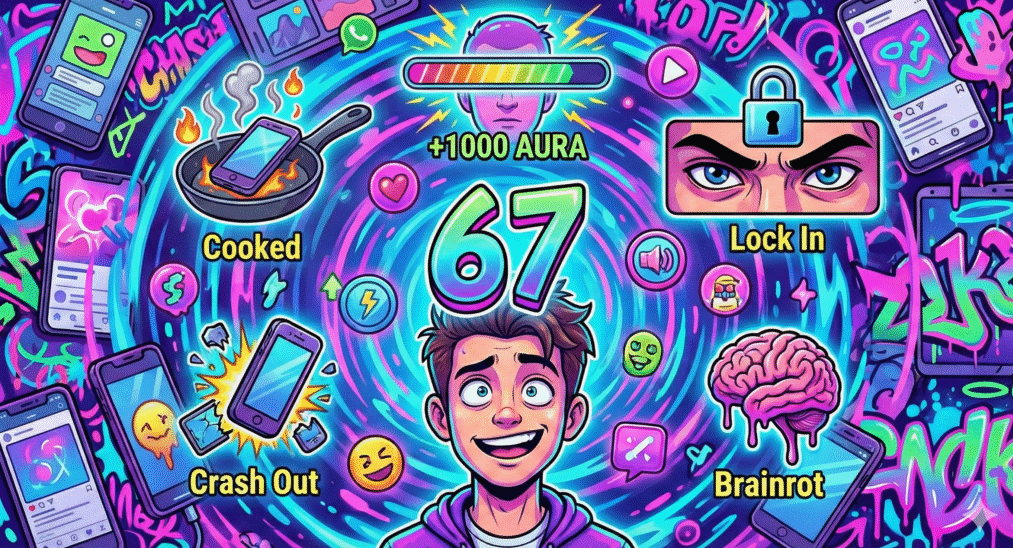
Gen Z Slang: The Ultimate Guide You Must Know
🤔 What Is Gen Z Slang and Why Does It Matter?
If you work with younger colleagues, have kids in high school, or simply scroll through TikTok, Gen Z slang hits you constantly. One day it’s “no cap,” the next it’s “brain rot.” Understanding Gen Z slang is not just about fitting in — it’s about staying connected to the fastest-moving slice of American culture.
Understanding these shifts is crucial because language is the primary vehicle for cultural identity. In 2026, the digital landscape has made regional dialects less relevant than “platform dialects.” This guide breaks down the most important terms, explains what they actually mean, and tells you exactly where they came from. By the end, you will speak Gen Z fluently — or at least stop embarrassing yourself at the dinner table.
🔍 Why Gen Z Creates New Words So Fast
Gen Z grew up on TikTok, Reddit, and Discord. These platforms reward novelty. A new slang term can go from a single viral video to universal usage in under 48 hours. A term coined in a live stream in Los Angeles can be part of a high schooler’s vocabulary in Seoul or London by the next morning.
According to a 2025 Pew Research study, 72% of Gen Z say they invent or adopt new words online before they appear in any formal dictionary. That’s a linguistic speed record no previous generation has matched. The cycle of “ironic usage” becoming “unironic usage” is the engine of this growth.
🔢 What Does “67” Mean? The Viral Number Explained
If you’ve seen people randomly yell “67!” in comment sections or videos, you’re not alone. The number “67” became a meme rooted in a viral video edit featuring NBA player LaMelo Ball. In the clip, “6-7” refers to his height — six feet, seven inches. The edit became so widely shared that fans started shouting the number as a random, absurdist punchline with zero required context.
Today, “67” functions as a catch-all reaction to anything surprising, funny, or chaotic. Think of it as Gen Z’s version of “lol” — except louder and more absurd. It’s meaningless on the surface, which is exactly the point. It represents the “post-irony” phase of internet humor where the lack of meaning is the joke itself.
📱 How “67” Spread So Fast
The LaMelo Ball edit racked up millions of views across TikTok and Twitter in late 2024. Remix culture kicked in immediately. Creators layered the audio over unrelated clips, reaction videos, and sports highlights. By early 2025, “67” had detached entirely from basketball and became pure internet chaos fuel. That’s peak Gen Z humor — the joke only makes sense if you were there during the initial viral wave.
🗣️ The Essential Gen Z Slang Dictionary (2026 Edition)
Here are the terms you absolutely need to know right now. These are not outdated — they are actively used across TikTok, Instagram, and real-life conversations as of March 2026.
💬 Everyday Expressions
- No cap — “No lie,” completely true. “That pizza was bussin’, no cap.”
- Bet — Agreement or confirmation. “Want to meet at 6?” “Bet.”
- Lowkey — Quietly, subtly, or secretly. “I’m lowkey obsessed with that show.”
- It’s giving — It’s giving off a certain vibe. “This outfit? It’s giving CEO.”
- Ate (that) — Did something exceptionally well. “She ate that performance, no crumbs.”
- Hits different — Better than usual due to context or mood. “Coffee hits different on a Monday.”
- Main character energy — Acting like you’re the confident star of your own story.
- Do it for the plot — Taking a risky or weird action just for the experience and story value.
🧠 Internet and Culture Terms
- Brain rot — The mental decay from consuming too much mindless online content. Gen Z uses this ironically to describe their own scrolling habits.
- NPC — Non-Player Character. Someone who moves through life on autopilot, following a script with no original thought.
- Delulu — Short for delusional. Used playfully. “She thinks he’s interested? That’s so delulu.”
- Aura — Someone’s overall energy or presence. High aura means cool, composed, and respected.
- Aura-maxxing — Deliberately doing things to increase your perceived coolness or mystique.
- Looksmaxxing — Actively working to improve your physical appearance through grooming, gym, and style.
- Ohio — Slang for something bizarre, cursed, or deeply wrong. “Why does this feel like Ohio?”
- Fanum tax — Taking someone’s food without asking, named after streamer Fanum.
🎮 Gaming-Origin Slang That Crossed Over
- L — Loss. Taking an L means failing or getting humiliated publicly.
- W — Win. The opposite. “That was a massive W.”
- Ratioed — When a post gets more negative replies than likes. A public social media execution.
- Glitch-walking — Moving in a laggy, robotic fashion on purpose, mimicking a video game character glitching.
😬 The Words That Reveal You’re Not Gen Z
Knowing what NOT to say matters just as much. Gen Z has a sharp radar for inauthenticity. Using the wrong term — or using a term that expired two years ago — is an immediate credibility loss.
⚠️ Terms That Died (Stop Using These)
- Cheugy — Peaked in 2021-2022. Using this word now is itself the definition of being out of touch.
- On fleek — Dead since 2016. If this leaves your mouth, the conversation is over.
- YOLO — Retired to the hall of fame. Do not resuscitate.
- Swag — Replaced entirely by “aura.” Nobody says swag unironically in 2026.
Gen Z doesn’t hate older generations for not knowing slang. They just immediately clock that you’re not one of them. The real secret? Say less, listen more. That’s actually considered “high aura” behavior.
👨👩👧 Why Parents and Managers Need This Guide
You might be thinking: “I’m 40, why do I care about Gen Z slang?” Fair question. But if you manage a team, teach a class, or parent a teenager, current slang is a real communication barrier. Saying the wrong thing — or missing the subtext of a message — leads to disconnect.
🏢 In the Workplace
Gen Z entered the workforce in large numbers starting around 2021. By 2026, they make up nearly 27% of the US workforce according to Bureau of Labor Statistics data. When a Gen Z employee says a meeting was “lowkey mid,” they’re not insulting your intelligence. They’re giving honest feedback in their native register. “Mid” means mediocre. Understanding that nuance saves unnecessary tension and allows for better collaboration.
🏠 At Home
If your kid comes home and says something “slapped,” that’s a high compliment. If they say a situation is “giving main character,” they’re impressed by the confidence shown. The communication gap between Millennials, Gen X, and Gen Z is real — but it’s bridgeable. You just need the right glossary to navigate the dinner table.
🌀 The Fastest-Moving Trends in 2026 Gen Z Slang
New terms are arriving constantly. These are the most active slang terms generating traction specifically in early 2026, based on TikTok and Reddit trending data.
🔥 New Entries for 2026
- Lore-dumping — Sharing your entire personal backstory in one conversation. “She absolutely lore-dumped on the first date.”
- Demure — Originally meaning modest. Gen Z turned it into a full aesthetic. Being “very demure, very mindful” is a positive identity statement about being composed.
- iPad kids — Generation Alpha children glued to screens. Gen Z uses this to distinguish themselves from younger siblings who grew up with even more device access.
- Gyatt — An exclamation of admiration or surprise, usually regarding someone’s physical appearance.
- Just put the fries in the bag, bro — A way to tell someone to stop overcomplicating a simple task and just do their job. It originated from a viral convenience store interaction where a worker was told to stop talking and just put the fries in the bag.
🧩 The Cultural Logic Behind Gen Z Language
Gen Z slang isn’t random. It follows consistent cultural logic. Most terms come from one of four sources: gaming, Black American Vernacular English (AAVE), TikTok audio clips, or absurdist internet humor. Understanding the origin helps you understand the usage.
📣 AAVE as the Foundation
A significant portion of mainstream Gen Z slang originates in Black American culture and AAVE. Terms like “no cap,” “bussin’,” “bet,” and “lowkey” all have deep roots in Black American communities before they went mainstream. This has sparked important conversations about cultural credit — who coined these terms, and who profits when they go viral. Understanding that context is vital if you want to use these terms with genuine respect.
🎵 Audio-Driven Memes
TikTok runs on audio. A single sound clip can generate millions of videos and embed a new phrase into daily language within a week. “67” is a perfect example. So is “very demure, very mindful” — a phrase from a single creator that became a global cultural moment. Audio-driven slang spreads faster and sticks harder than text-based memes because it’s multisensory.
✅ Conclusion: The Language Gap Is Closeable
Gen Z slang moves fast, but the underlying patterns are learnable. Know the big terms. Understand the cultural roots. Most importantly, don’t force it. The worst thing you can do is try too hard to sound young — that’s the literal definition of “cringe” in any generation’s dictionary.
Whether you’re a parent trying to connect with your teenager, a manager building a team-friendly culture, or just someone who doesn’t want to feel lost on the internet — this guide gives you the foundation. The language will keep evolving because that is the nature of a living culture. Stay curious, and you’ll keep up with the pace of 2026.
🔗 External Links
- Pew Research Internet & Tech
- BLS: Gen Z in the US Workforce
- Merriam-Webster Slang Tracker
- Bark.us: Gen Z Slang Guide
- TikTok Newsroom