US Allergy Season: How To Actually Survive Through 2026
Surviving the US allergy season requires more than just a box of tissues. First-time residents quickly realize our environment holds severe triggers. The sheer size of the country brings unique plant life and pollen threats. You might suffer from tree pollen in the Northeast. Alternatively, the South presents brutal winter allergens. Local climates severely dictate your specific allergy timeline and symptom intensity. You need a targeted strategy to fight back. We will break down exactly why American allergies feel so intense. We then share proven strategies for every major region.
🧐 Why Is The US Allergy Season So Extreme?
Immigrants often develop intense allergies after moving here. The data proves US allergy severity increases significantly over a long residence time. This happens because our unique environment mixes several hidden risk factors. These factors combine to overload your immune system.
The Impact of Processed Foods and Plastics
America consumes a vast amount of ultra-processed food. Additives like carrageenan can trigger hidden gut inflammation. Your baseline inflammation rises silently over the years. We then inhale microplastics and heavily polluted city air daily. Our immune system perceives harmless pollen as a massive threat. This creates an explosive Type-2 inflammation response inside your body.
The Hygiene Hypothesis At Play
Modern cities prioritize heavily sterilized urban environments. We overuse antibiotics and antibacterial soaps constantly. This extreme cleanliness deprives our childhood immune system of essential microbe exposure. A bored immune system starts attacking harmless particles. It fights peanut proteins and simple tree pollen instead of real diseases.
The Hidden Botanical Sexism Problem
City planners historically preferred planting male trees along our streets. Male trees do not drop messy fruits or seed pods. This approach keeps city sidewalks noticeably cleaner. However, male trees produce millions of tons of pollen annually. Without female trees to catch the pollen, the air becomes saturated. This “Botanical Sexism” directly fuels our intense spring allergies.
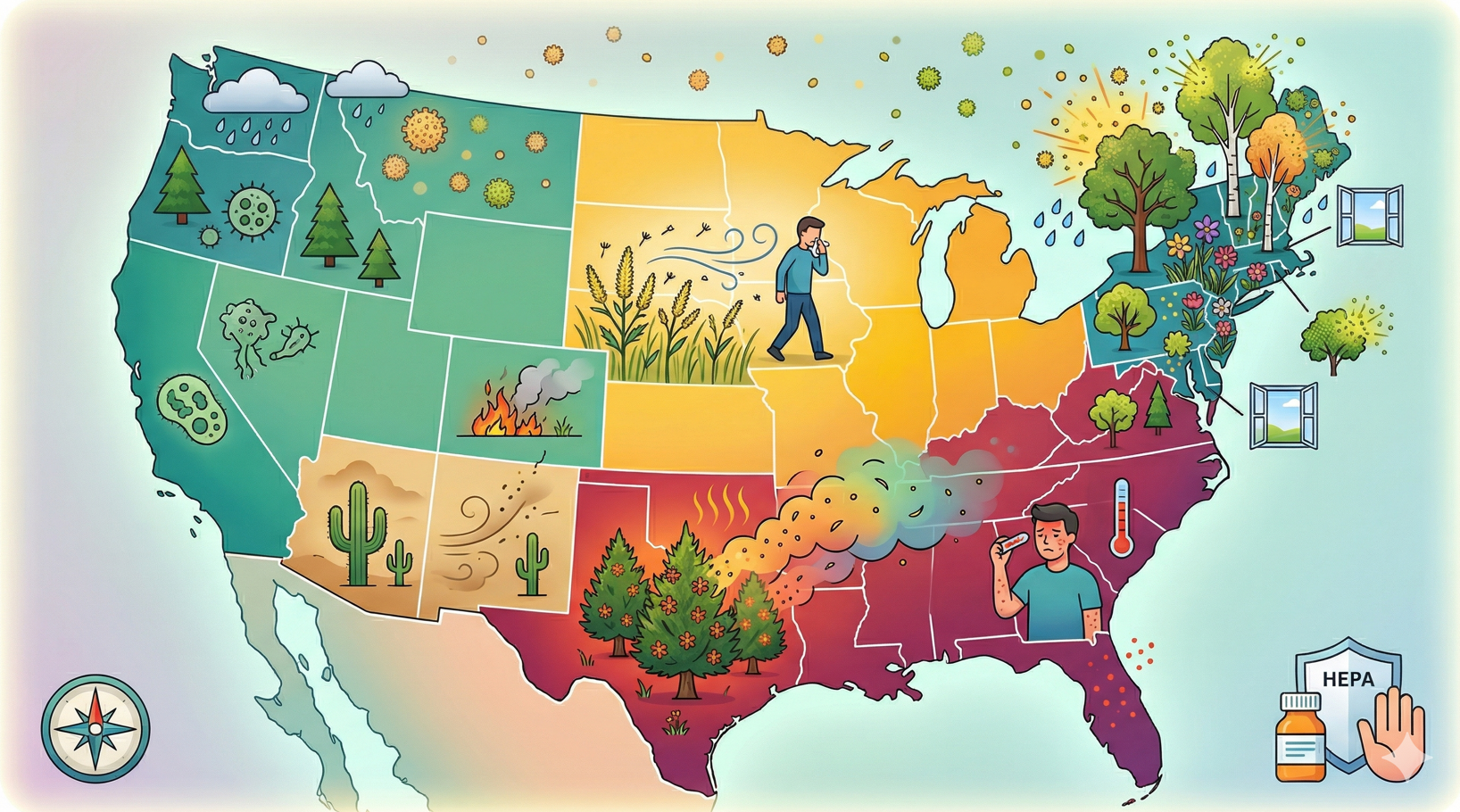
🌲 Northeast & Midwest: Short But Intense Waves
The northern half of the US experiences harsh, freezing winters. This delays the pollen release until the first warm days of spring. The trees then release a massive, concentrated pollen bomb simultaneously.
Northeast Spring Tree Pollen
Cities like New York and Boston suffer intensely from March through May. Maple, birch, and oak trees completely dominate the Northeast region. Oak pollen remains notorious for triggering extreme allergic rhinitis. A late winter causes all these tree species to bloom together. This overlap creates a miserable, congested spring for millions.
Midwest Ragweed Warnings
The Midwest sees terrible tree pollen in the spring. However, the late summer brings an entirely different nightmare. Pigweed and ragweed dominate the massive agricultural plains. High winds carry this weed pollen hundreds of miles across states. You must keep windows closed from August until the first heavy frost.
🌵 The South: Texas Cedar Fever Realities
The mild Southern climate allows plants to bloom practically all year. Texas and Oklahoma consistently rank as the worst states for allergy sufferers. The sheer volume of allergens here creates immense suffering.
Winter Allergies Strike The South
Southern states rarely experience deep, lasting freezes. Oak and elm trees begin dropping pollen as early as January. Bermuda grass then takes over completely during the scorching summer. Many locals develop chronic rhinitis rather than seasonal issues.
What Is Texas Cedar Fever?
Texas residents fear the infamous Mountain Cedar pollen every winter. The US allergy season peaks brutally here from December to February. Massive cedar forests release giant, visible clouds of red pollen. The pollen actually coats car roofs with a thick yellow dust. The symptoms mimic a severe flu or viral infection. You experience low-grade fevers, intense body aches, and blinding headaches.
My Personal Battle With Texas Allergies
Moving to Texas in 2008 felt like hitting a brick wall. Cedar Fever initially felt exactly like a nasty winter cold. Heavy flu medicine provided absolutely zero improvement over consecutive weeks. My body suffered terribly for the first five years living here. Fortunately, my immune system finally adapted after a grueling decade. I now only experience minor nasal congestion. My wife from Colorado faced identical struggles here. She endured terrible rashes for four years, but finally shows annual improvement.
🌴 The West: Dampness and Dry Winds
The West Coast features incredibly distinct ecosystems. Your allergy triggers depend entirely on your proximity to the ocean.
Pacific Northwest Mold Dangers
Washington and Oregon experience constant rain and heavy cloud cover. This damp environment breeds dangerous mold spores everywhere. These airborne spores trigger severe respiratory problems during the spring. Coastal California enjoys milder weather but suffers steady oak pollen year-round.
Southwest Desert Complications
Arizona and Nevada once attracted people seeking allergy relief. The dry desert naturally suppressed major pollen growth. Unfortunately, massive population booms changed the local ecology entirely. New residents relentlessly planted non-native trees and green grass lawns. The dry desert winds now blast these alien allergens everywhere.
💊 Proven Strategies To Relieve Symptoms
You cannot simply wait out the intense US allergy season. You must take proactive, aggressive steps to protect your health. Modern medicine and smart home tech provide excellent defenses.
Over The Counter (OTC) Medication Guide
Local pharmacies offer dozens of effective allergy pills. Claritin, Zyrtec, and Allegra provide solid non-drowsy relief for most adults. You must experiment to find which specific formula matches your body. Doctors highly recommend steroid nasal sprays like Flonase or Nasacort. These sprays aggressively reduce sinus swelling faster than simple pills.
Air Purification and Filter Upgrades
You must wash your hair immediately after spending time outdoors. Never open your windows when local pollen counts spike high. You must run your central HVAC system to filter the air. Upgrading your home air filters to MERV 11 or higher remains critical. Change these filters monthly during peak seasons. Consider running independent HEPA air purifiers inside bedrooms for optimal sleep.
Commit To Professional Allergy Shots
OTC medicine eventually fails for severe, chronic allergy sufferers. You should consult a certified allergist for precise skin testing. Doctors can formulate custom allergy shots to build your immunity safely. This immunotherapy process takes several years to complete fully. However, countless professionals consider it the ultimate cure for their absolute misery.